How to Make a Manhattan Cocktail
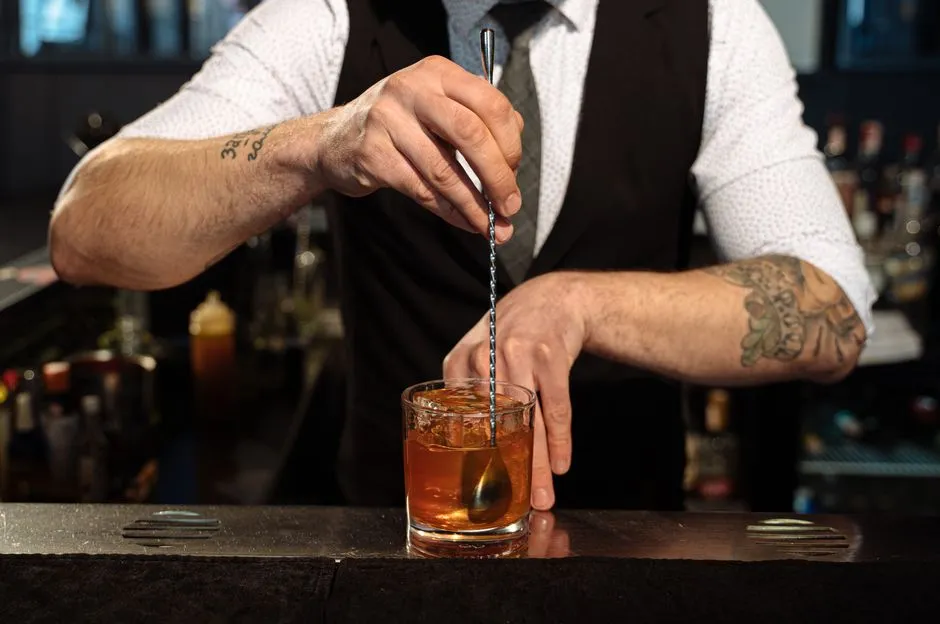
- The reliable Manhattan formula
- Gather four ingredients and five tools
- Keep the IBA benchmark and the house pour separate
- Choose rye first, then change one variable
- Treat sweet vermouth as a wine ingredient
- Measure bitters instead of treating the dash as theater
- Stir, strain, and garnish in six steps
- Decide whether to serve it up or on one large cube
- Fix the result by symptom
- Know the nearby variations
- A one-drink quality check
The reliable Manhattan formula
A classic Manhattan combines rye whiskey, sweet red vermouth, and aromatic bitters. For one drink, use 50 ml rye, 20 ml sweet vermouth, and 1 dash Angostura bitters. Stir the ingredients with ice, strain into a chilled cocktail glass, and garnish with a cocktail cherry. That is the current International Bartenders Association formula, and it is an excellent benchmark before you start adjusting the drink.
The formula is compact; the choices are not. Whiskey changes the center of the drink, vermouth contributes wine and botanicals, bitters season the join, and stirring supplies the chill and dilution. A good Manhattan tastes integrated rather than like cold whiskey followed by a sweet herbal echo.
This guide is for adults of legal drinking age. Make one measured serving at a time, never drive after drinking, and choose a nonalcoholic drink whenever alcohol is not appropriate.
Gather four ingredients and five tools
For one IBA-style Manhattan, set out:
- 50 ml rye whiskey;
- 20 ml sweet red vermouth;
- 1 dash Angostura aromatic bitters;
- 1 cocktail cherry for garnish;
- plenty of fresh ice for stirring.
You will need:
- a jigger with markings you can read;
- a mixing glass or sturdy straight-sided vessel;
- a barspoon or long spoon;
- a julep or Hawthorne strainer;
- a chilled cocktail or coupe glass.
A small home bar does not need a dedicated object for every verb. The whiskey home-bar guide shows which tools earn space. A measuring cup with accurate metric markings and a clean jar can produce a better Manhattan than expensive tools used by eye.
Keep the IBA benchmark and the house pour separate
The IBA recipe uses a 50:20 whiskey-to-vermouth relationship. Divide both numbers by 20 and the ratio is 2.5:1. Keeping the metric formula avoids pretending that common fractional-ounce measures are exact conversions.
For a jigger marked only in quarter ounces, this site's practical house pour is:
- 2 oz rye whiskey;
- 3/4 oz sweet vermouth;
- 2 modest dashes aromatic bitters.
That is a nearby, slightly larger home formula, not an exact restatement of the IBA recipe. The distinction matters because 2 oz is about 59 ml, while 50 ml is about 1.69 oz. Choose one formula and measure it consistently instead of switching units halfway through the glass.
Choose rye first, then change one variable
Rye is the IBA specification and a useful first bottle for learning the drink. In broad sensory terms, rye often makes the Manhattan feel drier or spicier, while bourbon can make the center seem rounder or sweeter. Those are tendencies, not promises: mash bill, proof, maturation, and the individual bottle all matter.
Start with a whiskey you already enjoy. If it disappears behind the vermouth, reduce the vermouth slightly on the next occasion or use a whiskey with a stronger profile. If the drink feels hot and disconnected, first check stirring and dilution before buying a more forceful bottle.
Do not compare three full Manhattans in one sitting for the sake of calibration. Make one drink, write down the formula, and change one variable the next time. Memory becomes far more useful once it has numbers attached.
For background on what the whiskey labels mean, our bourbon-versus-Scotch guide separates production rules from flavor expectations.
Treat sweet vermouth as a wine ingredient
Sweet vermouth is not red syrup. It is a fortified, aromatized wine whose botanical profile can move the Manhattan toward vanilla, bitter herbs, citrus, dark fruit, or spice. Changing vermouth can alter the drink as clearly as changing whiskey.
Use sweet vermouth for the classic version. "Dry" and "sweet" are not interchangeable color instructions, and a pale vermouth is not automatically dry. Read the actual product designation.
Once opened, refrigerate the bottle. MARTINI's current vermouth guide says opened vermouth should be refrigerated and gives about one month as its quality window before oxidation may diminish its freshness and complexity. That is a manufacturer-specific quality guide, not a universal food-safety expiration date for every bottle. Write the opening date on the label and follow the maker's storage instructions.
Before mixing, smell and taste a small drop of the vermouth itself. If it seems flat, stale, or unpleasant compared with a fresh bottle, a larger whiskey pour will not repair it.
Measure bitters instead of treating the dash as theater
The IBA calls for one dash of Angostura aromatic bitters. Our larger house formula uses two modest dashes. Bottle inserts, angle, and force can change dash size, so consistency matters more than a dramatic wrist movement.
Bitters are concentrated seasoning. Too little can leave whiskey and vermouth sitting beside each other; too much can dominate the finish. If you change the bitters, keep the whiskey and vermouth fixed so you can hear what moved.
Angostura's own materials identify aromatic bitters with both the Manhattan and Old Fashioned. The two drinks use bitters differently: a Manhattan pairs whiskey with vermouth, while an Old Fashioned pairs spirit, sugar, bitters, and water. Our Old Fashioned method gives that separate formula.
Stir, strain, and garnish in six steps
- Chill the serving glass. Put the empty glass in the freezer briefly or fill it with ice and water while you mix. Empty and dry it before straining.
- Measure the liquids. Add whiskey, sweet vermouth, and bitters to the mixing glass.
- Fill with ice. Add enough fresh ice for the liquid to move around it without the cubes simply floating in a shallow puddle.
- Stir for a repeatable starting time. Stir smoothly for about 20 to 30 seconds. Keep the spoon moving around the inside wall so the ice travels as a mass rather than being smashed.
- Strain immediately. Pour through the strainer into the chilled glass, leaving the mixing ice behind.
- Garnish once. Add a drained cocktail cherry. An expressed orange twist can be used instead, but it changes the aroma.
The 20-to-30-second window is a calibration point, not a law. Ice size and temperature, room temperature, mixing-glass mass, and stirring speed all change the result. Keep the same ice and vessel while learning, then adjust the time by a few seconds on a later serving.
Stirring is the conventional method because the drink contains no juice, dairy, egg, or syrup that needs vigorous mixing. Shaking will still chill and dilute it, but it introduces more air and ice fragments and changes the texture and appearance. If that is the drink you prefer, it is not a moral failing; it is simply a different result.
Decide whether to serve it up or on one large cube
The IBA strains the Manhattan into a chilled cocktail glass with no serving ice. This "up" presentation keeps the opening texture clean, but the drink begins warming as soon as it is poured.
Serving over one large cube in a rocks glass extends the chill and continues dilution. That can suit a slower drinker or a higher-proof whiskey, but it will not taste identical after ten minutes. Our clear-ice guide explains directional freezing; clarity is mostly presentation, while cube size, starting temperature, and time affect the drinking experience.
For an up Manhattan, choose a stemmed glass large enough for the drink without filling to the rim. For a rocks version, leave room for the cube before pouring. The whiskey-glass guide covers stability, rim, capacity, and care without insisting that one silhouette improves every pour.
Fix the result by symptom
| What you taste | Likely cause | Change next time |
|---|---|---|
| Hot, sharp, and separate | Too little chill or dilution | Stir a few seconds longer with cold fresh ice |
| Thin and muted | Too much dilution or warm, wet ice | Shorten the stir and begin with colder ice and glass |
| Sweet vermouth dominates | Ratio or vermouth profile | Reduce vermouth slightly or try a less sweet profile |
| Whiskey disappears | Whiskey too delicate for the pairing | Use a more assertive whiskey or a little less vermouth |
| Bitter finish takes over | Dash size or bitters quantity | Use fewer or smaller measured dashes |
| Flat, tired aroma | Old or poorly stored vermouth | Open a fresh refrigerated bottle |
Change one item per future serving. If you alter whiskey, vermouth, bitters, ratio, ice, and stir time together, the next Manhattan may improve but will decline to explain itself.
Know the nearby variations
These names are useful ordering shorthand, but recipes vary among bars and books. Ask how a venue makes one rather than assuming a universal house spec.
Perfect Manhattan: split the vermouth portion between sweet and dry vermouth. "Perfect" describes the split; it is not a quality verdict.
Dry Manhattan: replace sweet vermouth with dry vermouth and commonly use a lemon twist rather than a cherry. The result is not merely a less-sweet classic because the botanical profile changes too.
Rob Roy: use Scotch whisky in the Manhattan structure. The spelling changes with the bottle; the drink also changes with the whisky's style.
Black Manhattan: replace sweet vermouth with an amaro. Which amaro and how much depend on the recipe, so record the bottle rather than writing only "amaro."
Bourbon Manhattan: substitute bourbon for rye. This is the most useful first variation because everything else can stay fixed.
Make the benchmark first. Variation becomes informative once you know what it is varying from.
A one-drink quality check
Before serving, check four things:
- The formula was measured rather than free-poured.
- The vermouth was stored cold after opening and still tastes lively.
- The drink is cold and integrated, not watery or hot.
- The glass has enough empty space to carry safely.
Then stop adjusting. A Manhattan is three measured liquids, ice, and a garnish. Its elegance comes from each part being legible, not from adding a fifth bottle because the bar cart looked underemployed.