Home Bar Essentials: The Whiskey Drinker's Setup Guide
- The Setup at a Glance
- How We Evaluate Each Category
- Glassware: The One Non-Negotiable Upgrade
- Ice: Bigger, Slower, Clearer
- Decanters & Storage: Optional, But Worth Doing Right
- Cocktail Tools: The Kit for Actual Drinks
- What You Can Skip (For Now)
- Comparison: Three Home Bar Tiers
- Building It in the Right Order
- Small-Space Setups
- Bottom Line
The Setup at a Glance
You don't need a wall of bottles or a bar cart's worth of gadgets to drink whiskey properly at home. You need four categories covered — a glass that actually helps the whiskey, ice that doesn't drown the pour, something to store an open bottle in, and a small kit of tools if you plan to mix cocktails. Everything past that is optional polish.
Our verdict, if you want it before the details: start with a pair of proper nosing glasses and a large-format ice tray. Add a stopper or basic decanter once you're storing whiskey longer-term. Add cocktail tools only when you're actually making drinks beyond neat pours and simple rocks.
This guide is a checklist — what actually matters in each category, what's genuinely optional, and where beginners tend to overspend on gear they won't use. If you already know a category well, jump straight to the tier comparison table below and build your shopping list from there.
How We Evaluate Each Category
We judge home bar gear the same way across every category on this site: does it do the job better than the cheap default, is the build quality honest for the price, and does it hold up to regular use rather than sitting as a shelf ornament. We don't rank on looks alone, and we don't pretend a gadget is essential when it isn't. Where a category has a real weakness — like whiskey stones chilling less effectively than ice — we say so plainly rather than oversell it.
Glassware: The One Non-Negotiable Upgrade
If you upgrade only one thing, make it the glass. Standard kitchen tumblers work, but a glass shaped for whiskey changes how much aroma reaches your nose before the liquid reaches your tongue, which is most of what you register as "taste."
What to look for:
- A tapered or tulip-shaped bowl for nosing whiskey neat — it concentrates aroma toward the rim instead of letting it scatter
- A wide, heavy-bottomed tumbler for whiskey on the rocks, with enough room for ice without diluting the pour too fast
- Comfortable weight and grip — a glass that feels cheap or overly thin gets retired to the back of the cabinet
- Dishwasher-safe construction if you don't want to hand-wash after every pour, since some crystal pieces are hand-wash only
Worth knowing: a dedicated nosing glass (like a Glencairn-style tulip) is genuinely better for evaluating aroma and flavor neat, but it's a poor choice for whiskey over a big rock of ice — the narrow bowl doesn't have room. Most home bars end up needing both a nosing glass and a rocks tumbler rather than one glass that does everything.
For a full breakdown of shapes, weights, and which glass suits which pour, see our guide to the best whiskey glasses.
How Many Glasses Do You Actually Need
Two of each is the practical minimum — one for you, one for a guest — and four of each is plenty for most households that host occasionally. Buying a full 8- or 12-piece set makes sense mainly if you entertain often or if the set is a gift; otherwise it's cabinet space spent on glasses that see use twice a year. If storage is tight, a stackable or straight-sided tumbler style takes up less shelf room than bowl-shaped nosing glasses, which generally shouldn't be nested.
Care Basics
Most everyday whiskey glassware is dishwasher-safe, but crystal and hand-cut pieces often aren't — check before you run a load, since heat and detergent can dull crystal's clarity over repeated cycles. Hand-washing with warm water and a mild, unscented soap keeps both crystal and glass clear and avoids the cloudy film that harsh detergents can leave behind.
Ice: Bigger, Slower, Clearer
If you drink whiskey on the rocks with any regularity, ice quality matters more than most people expect. The physics is simple: a single large cube or sphere has less surface area relative to its volume than a handful of small ice cubes, so it melts slower and dilutes the pour more gradually.
What to look for:
- Large-format silicone molds for 2-inch cubes or spheres — these slow dilution noticeably compared to standard freezer trays
- Directional-freezing trays or clear ice makers if clarity matters to you visually — cloudy ice isn't a flavor problem, it's just trapped air and minerals, but clear cubes look sharper in a rocks glass
- Mold flexibility and freezer footprint — some large-format molds take up more freezer space than their output justifies
Worth knowing: bigger ice slows dilution but doesn't stop it, and very large formats can take 12–24 hours to freeze solid depending on your freezer, so this isn't an instant-gratification upgrade. If you've read up on whiskey stones as an alternative to ice, know going in that stones chill a pour far less than ice does — they lack the latent heat of melting that actually pulls temperature out of the liquid, so they're a mild-chill option at best, not a substitute for a proper rock of ice.
Our roundup of the best ice molds for whiskey compares cube and sphere options if you want a shortlist to start from.
Cubes vs Spheres
Cubes and spheres both slow dilution compared to small ice, but they behave a little differently. For the same volume, a cube has more surface area in contact with the liquid than a sphere does, so it chills a pour slightly faster early on. A sphere, with the least surface area of any shape for a given volume, melts marginally slower over the full drink — the tradeoff is that spherical molds are generally fussier to release cleanly than cube trays. Neither is wrong; it's a matter of which imperfection you'd rather deal with, faster initial dilution or a trickier mold.
Freezer Space and Water Quality
Large-format molds take up more freezer real estate than a standard ice cube tray, so measure your freezer's door and shelf clearance before buying anything oversized. Water quality plays a smaller role than most people assume: filtered water can freeze slightly clearer than hard tap water because it carries fewer dissolved minerals, but clarity is driven overwhelmingly by how the ice freezes — directionally, from one side — not by what you pour into the tray.
Decanters & Storage: Optional, But Worth Doing Right
You don't need a decanter to drink whiskey well — a resealed original bottle stored upright, away from light and heat, holds up fine for most drinkers. A decanter is mostly about presentation and having a display-worthy piece on a shelf or bar cart, not about "improving" the whiskey inside.
What to look for:
- An airtight stopper — this is the functional part; a decorative stopper that doesn't seal well lets the whiskey oxidize and slowly lose aroma
- Lead-free crystal or glass — many modern crystal pieces are lead-free, but it is not safe to assume; decorative crystal decanters are still commonly made with lead, so look for an explicit "lead-free" marking, and treat vintage or unmarked crystal as leaded
- A stable base — top-heavy decanters tip more easily than their price tag suggests
Worth knowing: if a decanter is genuine leaded crystal, it's fine for serving and short-term use, but prolonged storage of spirits in leaded glass can allow lead to leach into the liquid over weeks and months — that's a storage risk, not a drinking-from-the-glass risk. If you're decanting for the long haul rather than just for a party, choose lead-free glass or crystal and confirm it before you buy.
See our buying guide to whiskey decanters for a closer look at seal quality and style.
Does Decanting Actually Change the Whiskey?
Decanting doesn't "open up" whiskey the way it can affect some wines — whiskey is already a finished spirit at its final bottling strength, not a young wine that benefits from air contact before serving. What a decanter does change is presentation and, if the seal is good, how slowly an open bottle loses aroma over months of storage compared to a cap that's been opened and closed hundreds of times. If your main goal is protecting flavor rather than display, a well-sealed original bottle does that job just as well as a decanter.
Storage Basics Beyond the Vessel
Wherever you keep whiskey — bottle or decanter — store it upright, out of direct sunlight, and away from heat sources like a stove or a sunny window. Standing bottles upright (rather than on their side, as you might with wine) keeps the higher-proof spirit off the cork or cap seal, which can otherwise degrade over long periods of contact.
Cocktail Tools: The Kit for Actual Drinks
If your whiskey drinking stays neat or on the rocks, you can skip this section entirely. If you make Old Fashioneds, Manhattans, or other whiskey cocktails, a small tool kit pays for itself fast in consistency.
What to look for:
- A jigger for accurate measuring — eyeballing pours is the most common reason home cocktails taste inconsistent night to night
- A mixing glass and barspoon for stirred drinks — whiskey cocktails are almost always stirred, not shaken, to avoid over-diluting or clouding the drink
- A julep or Hawthorne strainer to keep ice and citrus peel out of the glass
- A sturdy muddler only if you make drinks that call for muddled sugar or fruit
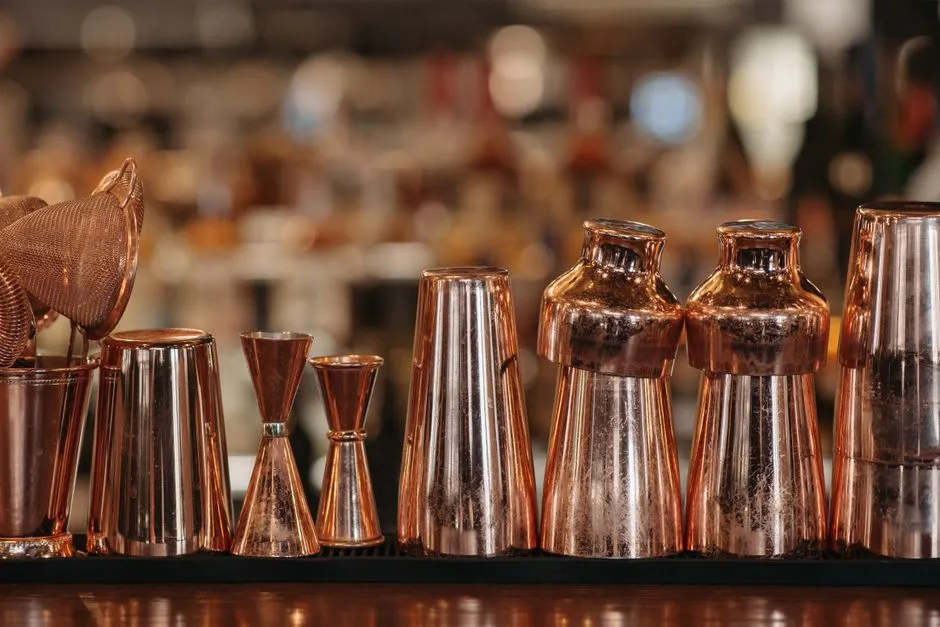
Worth knowing: most starter bar kits bundle a shaker as the centerpiece, but whiskey cocktails rarely need one — you'll get more use out of a good mixing glass and jigger than a shaker that sits unused. Buy the pieces you'll actually reach for rather than a bundle sized for gin and rum drinks.
Once you've got the tools, our how to make an Old Fashioned guide walks through technique and glassware together.
What You Can Skip (For Now)
Not everything marketed as a home bar essential earns a spot in a beginner setup. A few common overspends worth holding off on:
- Full bar carts and cabinets before you know your collection size — buy the storage once you know how many bottles you actually keep on hand
- Novelty ice molds shaped like skulls or logos — fun as a one-off, but they don't outperform a plain large-format cube or sphere on melt rate
- Cocktail smoker kits if you haven't made a smoked cocktail before — they're a genuinely fun add-on for the right drinker, but a poor first purchase before you know you'll use one regularly
- A large bottle collection before glassware and ice are sorted — more bottles don't improve the drinking experience if the glass and ice are still working against you
If you're shopping for someone else rather than building your own setup, our gift guide for whiskey lovers and whiskey gifts under $50 are easier to match to a recipient than guessing at bottle preferences.
Comparison: Three Home Bar Tiers
Budgets and needs vary, so here's how the essentials break down by how seriously you're building the setup. Prices are rough editorial ranges, not listings — actual cost depends on brand, materials, and retailer.
| Tier | Core pieces | Typical range | What you gain over the tier below | Skip it if |
|---|---|---|---|---|
| Starter | 2 nosing glasses, 1 large-format ice mold | $30–$60 | Aroma you can actually smell, and ice that stops flooding the pour | Nothing to skip — this is the floor |
| Everyday | Starter kit + rocks tumblers, basic stopper or decanter | $70–$150 | A glass built for a big rock, plus a seal that slows aroma loss on a bottle you'll keep for months | You finish bottles quickly and drink mostly neat |
| Serious | Everyday kit + jigger, mixing glass, barspoon, strainer, upgraded decanter | $150–$300+ | Repeatable cocktails and enough glassware to serve a table | You don't make stirred drinks or host more than occasionally |
These ranges assume mid-market, well-reviewed gear rather than budget dollar-store items or premium designer crystal, both of which will pull the numbers in either direction.
Building It in the Right Order
If you're starting from nothing, buy in this sequence rather than all at once:
- Glasses first. They're the cheapest way to notice a real difference in every pour you make.
- Ice second, if rocks pours are your default. Skip this step if you drink mostly neat.
- A stopper or decanter third, once you have an open bottle you're not finishing quickly.
- Cocktail tools last, and only once you know which drinks you'll actually keep making.
This order front-loads the upgrades with the biggest per-dollar impact on how whiskey actually tastes, and pushes the more specialized gear to the point where you know you'll use it.
Small-Space Setups
You don't need a dedicated bar cart or cabinet to run this checklist. A single kitchen shelf or a shallow tray on a counter comfortably holds two to four glasses, one ice mold in the freezer, and a decanter or bottle. If counter space is the constraint rather than storage, prioritize glassware and a stopper over a full decanter — a resealable bottle takes up less footprint than a decanter and stopper set, and it does the storage job just as well. Cocktail tools are the easiest category to keep compact: a jigger, barspoon, and mixing glass fit in a single drawer.
Bottom Line
A whiskey home bar doesn't need to be elaborate to be genuinely good. The failure mode isn't spending too little — it's spending early on the wrong things: a bottle collection before decent glassware, a shaker before a jigger, a decorative decanter before an airtight one. Buy for the way you actually drink, add the specialized gear once your habits have told you what you'll reach for, and the setup stays small without ever feeling underequipped.