Best Whiskey Decanters: A Buyer's Guide to Style & Seal
The Short Answer
A good whiskey decanter comes down to two things: a stopper that actually seals, and glass you're not worried about. Beyond that, style is personal. Below, we break decanters down by the styles that dominate the market, tell you honestly what each trades off, and flag the seal and material questions that matter more than how a bottle looks on a shelf.
Quick picks by priority:
- Best overall balance: A round or "ship's" style decanter with a fitted glass stopper — classic shape, wide base for stability, easy to pour from.
- Best for everyday pouring: A simpler cylindrical or barrel-style decanter with a low profile and a cork-and-glass or silicone-gasket stopper.
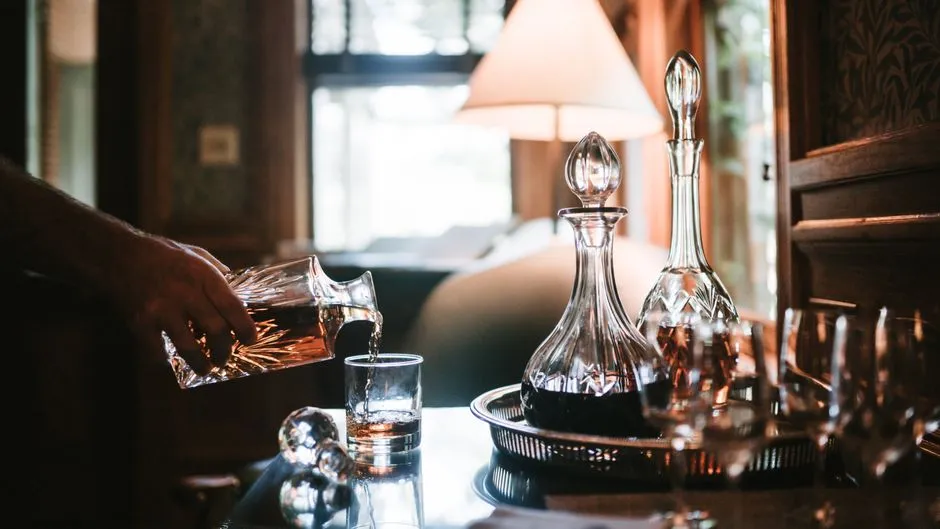
- Best for gifting or display: A panel-cut crystal decanter — the faceted cuts catch light and look the part on a bar cart.
- Best budget-friendly option: A lead-free soda-lime glass decanter without ornate cutting; you're paying for the seal and glass quality, not the cut work.
- Best for a growing collection: A decanter set with matching glasses, which keeps the whole setup visually consistent.
How We Evaluate Whiskey Decanters
We judge decanters on five things, in this order of importance:
- Seal quality. Does the stopper actually limit air exchange, or is it decorative? A loose-fitting stopper lets whiskey evaporate and oxidize over time.
- Glass composition. Is it labeled lead-free crystal or regular glass, or does it not say? For anything holding whiskey long-term, that matters (more on this below).
- Stability and pour control. A wide, low center of gravity resists tipping; a well-shaped neck and lip control the pour without dribbling.
- Cleanability. Wide necks are easy to reach inside; narrow ship's-style necks look great but are harder to clean well, especially around cuts and facets.
- Value at the price point. We're not grading against a "best in category" superlative — we're asking whether the build quality matches what you're paying.
Top Decanter Styles, Compared
| Style | Typical Capacity | Seal Type | Best For | Worth Knowing |
|---|---|---|---|---|
| Round / ship's decanter | ~750ml–1L | Fitted glass stopper | Classic look, stability | Wide base is great on a boat or shelf, but the bulbous body can be awkward to clean |
| Cylinder / barrel decanter | ~750ml–1L | Cork, glass, or gasket stopper | Everyday use, minimalist bars | Simple shape means less light-catching sparkle than cut crystal |
| Panel-cut crystal | ~750ml–1L | Fitted crystal stopper | Display, gifting | Deep cuts can trap residue; needs more careful hand-cleaning |
| Square/decanter-and-glass sets | Varies by set | Glass or cork stopper | Coordinated home bar setups | You're often paying partly for matching glasses, not just decanter quality |
Capacities above are typical ranges for the category — always check the specific listing, since decanters range from small display bottles to full magnum-sized pieces.
Round / Ship's Decanter
Why it works: The wide, low base is genuinely more stable than a tall bottle, which is where the "ship's decanter" name comes from — it was designed to resist tipping in rougher conditions. That same stability makes it a sensible pick for a home bar cart that gets bumped.
Worth knowing: The rounded body that makes it stable also makes the interior harder to reach with a cleaning brush. If you decant regularly rather than just for display, factor in a few extra minutes of cleaning care, or look at how to clean a whiskey decanter properly before you buy.
Cylinder / Barrel Decanter
Why it works: A straighter body is easier to clean, easier to store upright in a cabinet, and generally the least fussy option if you actually pour from it daily rather than treating it as a display piece.
Worth knowing: You give up some of the visual drama of a cut-crystal piece. If display matters as much as function to you, this style will read as plain next to a faceted decanter.
Panel-Cut Crystal Decanter
Why it works: The cut facets catch and scatter light, which is most of why decanters get gifted and displayed in the first place. This is the style most associated with a traditional "whiskey decanter" look.
Worth knowing: Two things to check before buying. First, confirm whether the piece is labeled lead-free — see our full breakdown of is lead crystal safe for whiskey for why that matters for anything stored rather than sipped quickly. Second, the deep cuts that make it beautiful also make it slower to clean, since residue can sit in the grooves.
Decanter and Glass Sets
Why it works: Buying a matched set solves the coordination problem in one purchase — decanter, glasses, sometimes a tray, all designed to look intentional together. It's a common gift format for exactly this reason.
Worth knowing: Sets vary widely in where the value sits. Some prioritize decanter quality with basic glasses; others do the reverse. Read what's actually being described for each piece rather than assuming the whole set is uniformly high-end. If gifting is the goal, our guide to gifts for whiskey lovers covers how to match a set to the recipient.
Lead Crystal vs Lead-Free Glass: What to Know
This is the one spec worth actually stopping to check. Traditional cut crystal has historically used lead oxide to achieve its brilliance and weight, and lead crystal is fine for drinking from — a normal pour doesn't sit in the glass long enough to be a meaningful concern. Long-term storage is a different question: leaving whiskey in a leaded-crystal decanter for weeks or months at a time is not recommended, because prolonged contact allows more lead to leach into the liquid than a quick pour does.
The practical takeaway: if you plan to decant a bottle and let it sit on display for extended periods, look specifically for decanters labeled lead-free crystal or lead-free glass. If you're decanting a fresh pour for guests and drinking it same-day or within a short window, this is a much smaller concern. For the full explanation of the chemistry and the actual risk level, see is lead crystal safe for whiskey.
Stopper and Seal Quality: The Part People Skip
A decanter is only as good as its stopper. A stopper that doesn't seat fully lets air in, which slowly oxidizes the whiskey and lets alcohol evaporate — you'll notice this as a gradual drop in fill level and a flattening of aroma over time. When evaluating a stopper:
- Check the fit description carefully. Ground-glass stoppers that are cut to match their specific decanter neck seal noticeably better than generic stoppers.
- Cork-and-glass combination stoppers (a glass cap over a cork insert) are common on cylinder-style decanters and generally seal well if the cork is intact.
- Avoid decorative-only stoppers where the description makes clear the piece is sold for display, not storage.
None of this needs to be airtight to jar-lid standards — whiskey's high alcohol content makes it far more stable than wine — but a decent seal is still the difference between a decanter that protects your pour and one that's just a fancy bottle.
Decanting: What It Actually Changes
Worth setting expectations here, because decanter marketing sometimes implies more than it delivers. Decanting whiskey doesn't "age" it or fundamentally transform the spirit the way it can with young wine. What it reliably does is let a very recently opened pour breathe briefly and look better on presentation. For the full rundown of what changes and what doesn't, read does decanting whiskey do anything.
Care Basics
Whatever style you land on, a few habits keep a decanter looking and performing its best:
- Hand-wash rather than dishwasher unless the listing explicitly says dishwasher-safe — cut crystal and dishwasher heat don't mix well.
- Dry thoroughly and store with the stopper off (or loosely set) between uses to avoid trapping moisture and odors.
- Keep it out of direct sunlight, which affects the whiskey inside more than the glass itself.
For step-by-step cleaning, including how to deal with cloudiness or built-up residue in cut crystal, see how to clean a whiskey decanter.
Matching Size to How You Actually Drink
Decanter capacity is worth thinking about before style. Most standard whiskey bottles hold 750ml, and many decanters are sized to match — but not all. A few practical guidelines:
- If you plan to decant a full bottle at once, confirm the decanter's stated capacity comfortably clears 750ml (or the size of the bottle you're buying), with headroom near the neck so you're not pouring right to the rim.
- If you're decanting smaller amounts for guests or a single serving session, a smaller-capacity decanter looks better partially full than a large one does, and it's easier to handle one-handed while pouring.
- If you collect multiple bottles, a set of smaller decanters for side-by-side tastings can be more useful than one large piece, since it lets you compare pours without opening several original bottles at once.
Oversized decanters bought purely for visual impact are common gifts, but check that the stated capacity is realistic for how the piece will actually get used — a decanter that's mostly empty most of the time isn't doing much for the whiskey inside it, since more airspace means more oxygen exposure per ounce of remaining liquid.
Common Buying Mistakes
A few patterns come up often enough to call out directly:
- Buying for looks and ignoring the stopper. The stopper is doing the functional work; the body is doing the aesthetic work. Weight both.
- Assuming "crystal" means lead-free, or vice versa. Neither assumption is safe — check the listing's actual wording, and when in doubt, treat it as leaded and use it for short-term serving rather than long-term storage.
- Choosing a narrow-necked, heavily cut piece without a cleaning plan. It will look great on day one. Cleaning it well six months in is where people get frustrated. If that's the style you want, budget for a bottle brush and accept the extra few minutes per cleaning.
- Skipping stability for style. A tall, narrow decanter on an open shelf near a well-trafficked kitchen or bar cart is a tip risk. Weigh footprint and base width against where it'll actually live.
Bottom Line
Pick your style for how you'll actually use it: ship's decanters for classic stability, cylinders for low-fuss daily use, panel-cut crystal for display and gifting, sets for a coordinated bar. Then let seal quality and lead-free labeling — not the sparkle — decide between two options you like equally. A decanter that seals well and is easy to clean will outlast one that only photographs well.