Is Lead Crystal Safe for Whiskey? Decanter Facts Explained
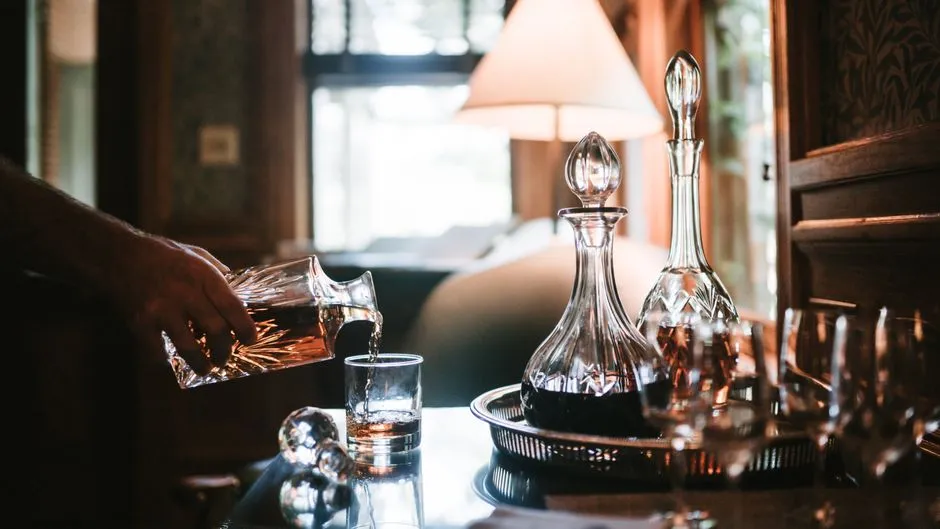
- The Short Answer
- What "Lead Crystal" Actually Means
- Is It Safe to Drink From a Lead Crystal Glass?
- The Real Risk: Storage, Not Sipping
- Common Myths, Cleared Up
- Lead Crystal vs Lead-Free Crystal vs Glass
- How to Tell If Your Crystal Contains Lead
- Safe-Use Guidelines for Lead Crystal Decanters and Glasses
- Should You Buy Lead Crystal or Lead-Free Crystal?
- Bottom Line
The Short Answer
Lead crystal is safe for the way most people actually use it: pouring a drink, sipping it, and washing the glass. The risk with leaded glass is contact time, not contact itself. A short pour in a lead crystal rocks glass isn't a meaningful exposure. Storing whiskey in a lead crystal decanter for weeks or months is a different story — that's where leaching becomes a real, documented concern. If you remember one rule from this guide, make it this: drink from lead crystal, don't store in it long-term.
What "Lead Crystal" Actually Means
"Crystal" in barware is a marketing term for glass with added lead oxide, typically in the range of roughly 18-32% by some traditional formulations (full lead crystal), with lower-lead and lead-free versions also common today. The lead is what gives crystal its characteristic weight, brilliant clarity, and the ability to be cut into deep, light-catching facets. Ordinary soda-lime glass can't hold an edge the same way, which is why cut crystal has been the traditional choice for fine glassware and decanters.
Lead-free crystal exists too, usually made with substitutes like potassium oxide, zinc oxide, or titanium dioxide to achieve similar brilliance and weight without lead. It's increasingly common, and many modern "crystal" pieces sold today are labeled lead-free — though labeling isn't always prominent, so it pays to check before you buy.
Is It Safe to Drink From a Lead Crystal Glass?
Yes, for normal drinking use. The concern with lead crystal isn't holding a glass or taking a pour — it's prolonged liquid contact with the leaded surface. A whiskey poured into a lead crystal Glencairn or rocks glass, drunk within a reasonable window, picks up a negligible amount of lead compared to what happens when a liquid sits against that same surface for days or weeks.
This is a widely accepted distinction among glass manufacturers, health agencies, and collectors: brief contact during serving is treated very differently from extended storage. If you enjoy drinking from cut crystal glassware, there's no need to retire it over lead concerns — just don't use it as a storage vessel.
The Real Risk: Storage, Not Sipping
This is the part that trips people up, because it's counterintuitive: the beautiful lead crystal decanter that looks perfect for keeping whiskey on display is actually the worst place to keep it long-term. Alcohol is a more effective solvent than water, and the longer a spirit sits against leaded glass, the more lead it can leach from the surface. Studies on decanted spirits have shown measurable lead uptake increasing with storage duration — going from days to weeks to months makes a real difference, not a trivial one.
The practical takeaway: a lead crystal decanter is fine for serving whiskey at a gathering or keeping a bottle out for a few days of regular use. It's not the right vessel for a bottle you intend to keep decanted for months. If you love the look of a crystal decanter but drink slowly, a lead-free crystal or glass decanter is the safer long-term home for your whiskey — save the leaded piece for glasses, or for short-term display only. For more on decanter shopping in general, our guide to choosing a whiskey decanter walks through style, seal quality, and material side by side.
Common Myths, Cleared Up
A few misconceptions tend to circulate around lead crystal, so it's worth addressing them directly:
- "Any lead crystal is dangerous." Not for drinking use. The distinction health guidance draws is almost always about extended storage, not a single pour or an evening of use.
- "Lead-free crystal looks noticeably worse." In practice, modern lead-free formulations get close enough in clarity and weight that most people can't tell the difference by eye or in hand.
- "Older crystal is automatically riskier." Age itself isn't the issue — contact time with liquid is. A decades-old lead crystal glass used only for serving carries the same low-risk profile as a brand-new one used the same way.
- "You can just rinse the risk away." Washing a glass after use is good practice for hygiene, but it doesn't change how much lead may have transferred during the time liquid was actually in contact with the glass.
Lead Crystal vs Lead-Free Crystal vs Glass
| Lead Crystal | Lead-Free Crystal | Standard Glass | |
|---|---|---|---|
| Clarity & sparkle | Excellent — the benchmark | Very good, close to leaded crystal | Good, less brilliant |
| Weight & feel | Heaviest, substantial in hand | Moderate to heavy | Lightest |
| Cut detail | Holds intricate facets best | Holds cuts well | Simpler cuts only |
| Safe for drinking | Yes, short contact | Yes | Yes |
| Safe for long-term storage | No — avoid extended decanting | Yes | Yes |
| Dishwasher safe | Often hand-wash recommended | Varies by piece | Usually yes |
| Typical price range | Mid to high | Mid to high | Budget to mid |
Prices vary widely by brand, cut complexity, and retailer, so treat any range as a rough guide rather than a quote.
How to Tell If Your Crystal Contains Lead
Manufacturers aren't always required to state lead content clearly, but a few practical checks help:
- Check the product description or box. Terms like "24% lead crystal" or "full lead crystal" confirm leaded glass. "Lead-free crystal" or "crystalline" usually signals a lead-free formulation, though terminology isn't perfectly standardized across brands.
- Weight is a rough clue. Leaded crystal tends to feel noticeably heavier than glass of the same size, though this isn't a reliable test on its own.
- Sound test. A gentle flick often produces a clear, ringing tone in lead crystal versus a duller sound in standard glass — again, a helpful hint rather than proof.
- When in doubt, contact the manufacturer. If a piece was a gift or came without documentation, the maker's customer service can usually confirm the glass composition.
Safe-Use Guidelines for Lead Crystal Decanters and Glasses
A few habits keep lead crystal both beautiful and low-risk to use:
- Drink, don't store. Use lead crystal glasses freely for serving. Reserve lead crystal decanters for short-term use — a bottle you'll finish within a week or two is a reasonable window; beyond that, transfer to lead-free crystal or glass.
- Never decant for months at a time in leaded glass. If you like the ritual of decanting a bottle you're savoring slowly, choose a lead-free vessel for that purpose.
- Hand-wash when possible. Dishwasher detergents and heat can etch crystal surfaces over time, which may affect appearance and, some manufacturers suggest, leaching potential. Our guide on cleaning a whiskey decanter covers the gentler methods that keep crystal looking sharp.
- Avoid using lead crystal for children's tableware or everyday food storage, where contact time is typically much longer than a dinner service.
- Display empty, drink from full. A decanter kept as a decorative piece with no liquid inside carries none of the leaching concern — the risk is specifically about liquid sitting in contact with the glass.
Should You Buy Lead Crystal or Lead-Free Crystal?
If you want the classic weight and sparkle of traditional cut crystal and you're buying glasses for drinking, lead crystal is a perfectly reasonable choice — the safety profile for serving is solid. If you're buying a decanter you plan to keep filled and on display for extended stretches, lead-free crystal or glass is the more practical pick, since it removes the storage-duration question entirely. Our comparison of crystal versus glass whiskey glasses goes deeper into how the two perform beyond the lead question — clarity, durability, and value.
There's no wrong answer here, just a mismatch to avoid: gorgeous leaded crystal used as a long-term storage vessel. Match the glass to the job — pour and drink from crystal, store in lead-free — and you get the best of both without the tradeoff.
Bottom Line
Lead crystal is safe for drinking whiskey and perfectly fine for everyday serving. The genuine risk is long-term storage: liquid sitting in a leaded decanter for weeks or months can leach measurably more lead than a quick pour ever will. Enjoy your crystal glassware, but keep the whiskey you're saving in a lead-free decanter or the original bottle.