Best Whiskey Glasses: 9 Styles for Neat, Rocks & Tasting
The Short Answer
If you drink whiskey more than one way, sometimes neat, sometimes over ice, sometimes long with soda, no single glass covers every occasion well. The Glencairn is the best all-around choice for nosing and sipping neat, a solid rocks glass is non-negotiable if ice is part of your routine, and a highball glass earns its spot the moment whiskey and a mixer enter the picture. Below are nine styles worth knowing, what each one actually does differently, and where each one falls short.
| Style | Best For | Typical Capacity | Stemmed? |
|---|---|---|---|
| Glencairn | Nosing & tasting neat | Small, single-pour | No |
| Rocks (Old Fashioned) | Whiskey over ice | Roughly 6-10 oz | No |
| Copita / Tulip | Serious nosing sessions | Small, single-pour | Usually |
| Double Old Fashioned | Everyday all-purpose use | Roughly 10-14 oz | No |
| Snifter | Slow, warmed sipping neat | Large bowl, small pour | Short stem |
| Highball | Whiskey and soda, cocktails | Roughly 10-12 oz | No |
| Crystal Tumbler | Gifting, special occasions | Rocks or double-rocks sizing | No |
| NEAT-style Glass | Reducing alcohol harshness | Small, single-pour | No |
| Shot Glass | Flights, quick comparison tastings | Roughly 1-2 oz | No |
Capacities are approximate and vary by maker, so treat them as a rough sense of scale rather than a spec sheet.
How We Evaluate Whiskey Glasses
We judge glassware on four things, and every entry below is assessed against all four:
- Shape. How the bowl and rim direct or scatter aroma toward your nose.
- Feel in the hand. Weight, balance, grip, and how much your palm warms the pour.
- Practicality. Durability, washing and storage, and whether ice fits.
- Value. What the shape actually does for you relative to what it typically costs.
We buy nothing on your behalf and sell nothing, so there is no price tag or star rating attached to any of these. Where we mention money it is an editorial range, and ranges move around by retailer, set size, and whether you are buying singles or a boxed set.
None of these nine styles is objectively "the best" in isolation. A Glencairn that is fantastic for nosing a cask-strength single malt is the wrong choice for a highball on a hot afternoon. That is why this guide is organized by what each shape is best for, rather than ranked top to bottom.
The 9 Best Whiskey Glass Styles
1. Glencairn Glass — Best Overall for Nosing and Tasting
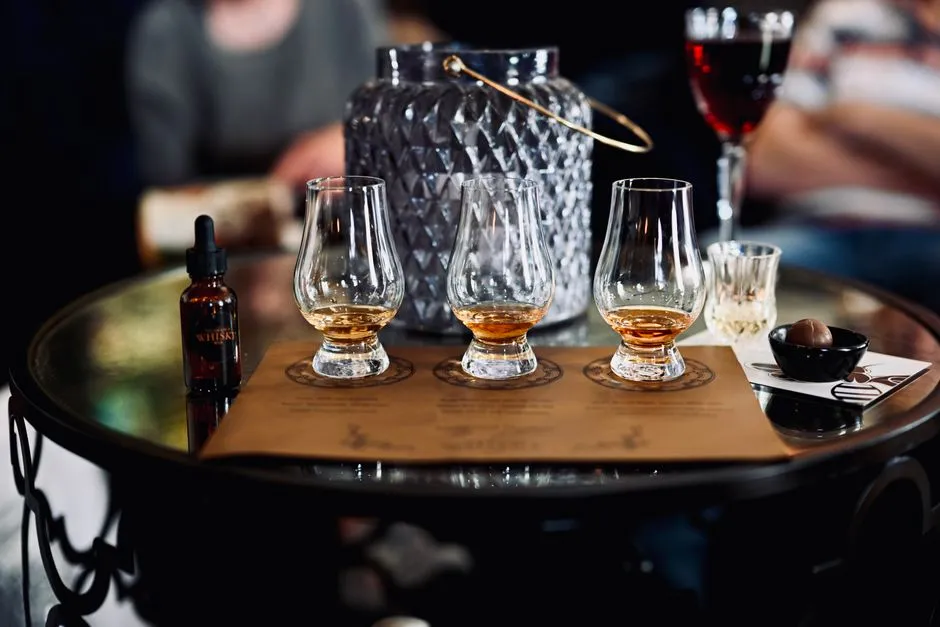
The Glencairn was purpose-designed by glassmakers working with the Scotch whisky industry, and the shape shows it. A wide bowl gives aroma compounds room to develop, then tapers to a narrower rim that funnels scent toward your nose. It has become close to an industry standard at distillery tasting rooms and whisky competitions for exactly that reason, though plain tumblers still outnumber it by a wide margin in ordinary bars and home cabinets.
Shape: the tapered rim concentrates aroma without requiring aggressive swirling, so a neat pour gives up more of itself with less effort. Feel: the squat stemless base sits low in the hand and is hard to knock over, but your palm does contact the bowl, which warms the whiskey faster than a stemmed glass. Practicality: the narrow mouth makes it awkward for anything with ice, since cubes barely fit and the shape was never built to accommodate them. Most versions are sturdy enough for everyday use and tolerate careful machine washing, though tall thin bowls are worth hand-washing if you are attached to them. Value: basic single glasses typically land in the $10-$15 band, which is the cheapest meaningful upgrade in whiskey drinking. Prices vary by retailer.
2. Rocks Glass (Old Fashioned Glass) — Best for Whiskey on the Rocks
The classic short, wide-bottomed tumbler, and the shape most people picture when they picture whiskey. If your normal pour includes ice, whether a large cube, a sphere, or a few standard cubes, this is the glass built for it. There is enough surface area at the base to hold ice steady and enough volume to add a splash of water without crowding the drink.
Shape: the wide opening that makes it practical for ice also lets aroma dissipate quickly, so it is a weak choice if you actually want to nose the whiskey. Feel: the heavy base gives it a satisfying weight and makes it genuinely hard to tip. Practicality: this is the most forgiving glass on the list. Thick soda-lime versions survive dishwashers, drops, and years of casual use. Value: plain versions are inexpensive, often a few dollars each in multipacks, and heavier bar-quality tumblers run higher. Even the upgraded ones are cheap relative to how much use they get.
For a deeper look at how these two shapes stack up side by side, our Glencairn vs. rocks glass comparison walks through the tradeoffs in more detail. If ice quality is the part you care about, our guide to making clear ice matters more than the glass does.
3. Copita (Tulip) Glass — Best Alternative Nosing Glass
The copita is the older shape here. It comes from sherry tasting in Spain, and its bowl-to-narrow-rim tulip profile is part of the design lineage that modern whisky nosing glasses drew on rather than the other way around. Most copitas are stemmed, which is the practical difference you feel: your hand stays off the bowl, so the whiskey warms more slowly and stays closer to the temperature you poured it at.
Shape: aroma concentration is excellent, comparable to a Glencairn, with the tulip flare guiding vapor to a tight point. Feel: the stem adds a touch of ceremony that suits slow, deliberate tasting, and the glass is light enough to swirl easily. Practicality: the small capacity and narrow stem make it less stable and more prone to tipping than a stemless nosing glass, and thin stems break. Hand-wash them. Value: priced similarly to a Glencairn or slightly above, and worth it only if you run dedicated tastings. For casual pours it is a fussy choice.
4. Double Old Fashioned / Tumbler — Best Everyday All-Purpose Glass
A slightly taller, higher-capacity cousin of the standard rocks glass. It holds a bigger pour, more ice, and doubles easily as a glass for whiskey cocktails that need extra room, like an Old Fashioned built over a large cube or a whiskey sour on the rocks.
Shape: wide mouth, minimal aroma concentration. It will not do for a glass what a Glencairn does. Feel: substantial without being clumsy, and the extra height suits a bigger hand better than a squat rocks glass. Practicality: the most versatile glass in the cabinet. One shape handles neat pours in a pinch, iced pours comfortably, and simple cocktails without feeling undersized, and it survives the dishwasher. Value: the single best-value purchase on this list if you are only buying one type of glass, because it never sits unused.
5. Snifter — Best for Slow, Warmed Sipping Neat
Best known from brandy and cognac service, the snifter has the widest bowl of any glass in this roundup, sitting on a short stem so you can cup the bowl in your palm and gently warm the whiskey, releasing aroma as it does. The rim narrows sharply above that wide bowl, which holds the released aroma in place instead of letting it drift off.
Shape: that combination of a large evaporating surface and a tight rim is exactly why it can work against you at high proof. Ethanol vapor collects in the enclosed headspace, and deliberate hand-warming produces more of it, so a barrel-proof pour can read as sharp alcohol burn rather than developed aroma. A Glencairn has a much smaller bowl and less hand contact, so it generally builds less ethanol vapor and noses more comfortably at cask strength. The difference is vapor behavior and warming, not bowl width, since the snifter is the wider glass by a good margin. Feel: lovely in the hand, and the short stem still lets you set it down securely. Practicality: the wide bowl and thin rim make it a hand-wash item, and it stores awkwardly. Value: a genuine specialist. Skip it unless slow warmed sipping is a habit rather than an occasional mood.
6. Highball Glass — Best for Whiskey and Soda, or Cocktails
Tall, straight-sided, and built for volume. This is the glass for a whiskey highball, a whiskey and ginger, or any long drink where ice, mixer, and spirit all need room.
Shape: no aroma concentration at all, by design. A tall column of ice and soda is not something you nose. Feel: light and easy, though a full one is top-heavy compared with a tumbler. Practicality: dishwasher-safe, stackable in most designs, and cheap to replace. Value: high, if you drink highballs. Zero, if you do not. It does one job well and one job only, and as a neat-whiskey glass it is the wrong tool entirely.
7. Crystal Tumbler — Best for Gifting and Special Occasions
Crystal versions of the rocks glass or tumbler bring extra weight, clarity, and often cut or etched detailing that a standard glass tumbler does not have. For gifting, a set of crystal rocks glasses reads as more considered than plain glass.
Shape: identical to whatever tumbler it is modeled on, so the aroma story is the same as a rocks glass. Crystal does not change flavor. Feel: the heft and clarity genuinely elevate the experience of a pour, and cut crystal catches light in a way soda-lime glass does not. Practicality: crystal is softer and more brittle than tempered soda-lime glass, so thin rims can chip if you drop a large hard cube straight in. Lower the ice with tongs rather than dropping it. Care instructions vary more than people assume: plenty of modern lead-free crystal is rated dishwasher-safe, while cut and gilded pieces usually want hand-washing to protect the detailing. Check what the maker actually says instead of assuming. Value: the extra money buys weight, clarity, and presentation, not better aroma performance.
One safety note worth being clear about. If the piece is traditional leaded crystal, it is fine to drink from, but it should not be used for long-term storage of whiskey, because lead can leach into liquid held in leaded glass over extended periods. That matters far more for decanters than for tumblers you empty in an hour. Look for lead-free crystal if it is a concern, especially on a gift, and see our explainer on whether lead crystal is safe for whiskey for the full picture.
8. NEAT-Style Glass — Best for Reducing Alcohol Harshness
A newer category, designed specifically to reduce the perceived ethanol burn that can mask aroma in higher-proof pours. The bowl flares outward at the rim rather than tapering inward, which is the opposite of the Glencairn approach, and the intent is to let lighter alcohol vapor escape sideways while heavier aroma compounds stay available at the nose.
Shape: unconventional, and it does behave differently on hot pours. Whether you prefer it is genuinely personal. Feel: stemless and stable, though the flared rim makes it look unlike anything else on a shelf. Practicality: treat it as a hand-wash tasting glass. Value: the weakest case on this list for a general drinker. If barrel-proof bourbon and cask-strength malts are most of what you pour, it earns consideration. Otherwise most people will not notice enough difference from a Glencairn to justify another glass in the cabinet.
9. Shot Glass — Best for Flights and Quick Comparison Tastings
Small, simple, functional. When you are running a side-by-side flight of three or four whiskeys, a set of small glasses lets you compare pours without committing a full serving to each one.
Shape: essentially no aroma development happens in a straight-sided shot glass. It is a measuring and comparison tool. Feel: irrelevant here, which is part of the point. Practicality: cheap, stackable, dishwasher-proof, replaceable. Value: unbeatable for the narrow job of comparing several whiskeys in one sitting, and pointless for lingering over a single pour.
Glass Shape at a Glance
| Style | Aroma Concentration | Handles Ice | Everyday Durability |
|---|---|---|---|
| Glencairn | High | Poor | Good |
| Rocks Glass | Low | Excellent | Excellent |
| Copita / Tulip | High | Poor | Fair |
| Double Old Fashioned | Moderate | Excellent | Excellent |
| Snifter | High (can run hot) | Poor | Good |
| Highball | Low | Excellent | Good |
| Crystal Tumbler | Low-Moderate | Good (chip risk on thin rims) | Fair |
| NEAT-Style | High | Poor | Fair |
| Shot Glass | Minimal | N/A | Excellent |
Crystal holds ice as well as any tumbler in terms of shape, but the material is more brittle than thick bar glass. Large cubes dropped in from height are the usual cause of a chipped rim, so use tongs.
The Best Glasses for Bourbon
Bourbon is an American whiskey made from a mash of at least 51 percent corn and aged in new charred oak, and that combination tends to push it toward sweeter, heavier notes than a typical Scotch. Nothing about that changes the physics of glassware, so the shortlist is the same, but the emphasis shifts.
For sipping bourbon neat, a Glencairn or copita still concentrates aroma best. For everyday bourbon drinking, the rocks glass and double old fashioned matter more than they do on the Scotch side, simply because bourbon over a large cube and bourbon in an Old Fashioned are both extremely common serves, and the double old fashioned handles the cocktail as well as the pour.
Proof is the one variable worth planning around. Plenty of bourbon is bottled at cask or barrel strength, well above the standard 40 to 45 percent range, and high-proof spirit is where glass shape shows up most. That is the situation where the snifter's warming works against you and where a flared NEAT-style glass makes its case. A small splash of water in a wide tumbler is the simpler fix, and it costs nothing. If you want the broader context on how the two categories differ, our bourbon vs. Scotch explainer covers it.
Which Whiskey Glass Should You Actually Buy?
For most people the honest answer is two glasses, not one. A Glencairn covers neat pours, tasting sessions, and any time you want to actually smell what is in the glass. A rocks glass or double old fashioned covers everything else: ice, casual pours, and simple cocktails. Everything on this list beyond those two is a refinement for a specific habit. A snifter if you like a warmed, slow neat pour. A highball if mixed drinks are a regular part of your routine. Crystal if you want something that feels special or makes a good gift.
Price is a smaller factor than shape. A well-made basic Glencairn or rocks glass typically runs somewhere in the $10-$25 range per glass, while crystal versions and boxed sets climb well above that depending on brand and detailing. Prices vary by retailer and change over time. Spend on the shape that matches how you actually drink before spending more on materials.
If you are building out a full setup rather than buying one glass at a time, our guide to types of whiskey glasses breaks down the shapes in more technical detail, including how bowl geometry affects what you smell and taste. And if any of these are headed to someone else's cabinet, our gift guide for whiskey lovers has more ideas beyond glassware.