Types of Whiskey Glasses: The Complete Guide (With Chart)
- Quick Answer: Which Whiskey Glass Should You Use?
- Whiskey Glass Types at a Glance
- Why Glass Shape Actually Changes What You Taste
- Stemmed, Stemless, and Why It's Not Just Aesthetics
- Glencairn Glass
- Copita / Tulip Glass
- Rocks Glass (Old Fashioned Glass)
- Double Old Fashioned (DOF) Glass
- Snifter
- Highball Glass
- Shot Glass
- Quaich (Traditional Scottish Drinking Cup)
- Crystal or Glass: Does the Material Change Anything?
- How to Match the Glass to How You Drink
- Does the Whiskey Style Change the Glass?
- Care and Durability
- Bottom Line
Quick Answer: Which Whiskey Glass Should You Use?
There's no single "correct" whiskey glass — the right one depends on what you're drinking and why. If you had to own just one, a Glencairn covers nosing and sipping neat pours better than almost anything else on the shelf. If you drink mostly on the rocks or in cocktails, a sturdy rocks glass (also called an Old Fashioned glass) is the more practical everyday choice. Drinkers who taste flights or attend tastings often keep a copita or tulip glass on hand as well, since its narrower mouth concentrates aroma even more than a Glencairn's.
Everything else — snifters, highballs, shot glasses, quaichs — has a role, but a narrower one. Below is the full lineup of eight shapes, what each one actually does to the whiskey in it, and where each one falls short.
Whiskey Glass Types at a Glance
| Glass | Best For | Bowl Shape | Typical Capacity |
|---|---|---|---|
| Glencairn | Neat sipping, nosing | Tapered, narrowing to rim | 5–6 oz |
| Copita / Tulip | Serious nosing, tastings | Narrow tulip, small mouth | 3–6 oz |
| Rocks / Old Fashioned | On the rocks, simple cocktails | Wide, short, straight sides | 6–10 oz |
| Double Old Fashioned (DOF) | Rocks with large ice, stronger pours | Wide, taller than standard rocks | 12–16 oz |
| Snifter | Swirling, warming, after-dinner sipping | Wide bowl, tapered rim | 6–12 oz |
| Highball | Whiskey and mixer, long drinks | Tall, straight cylinder | 8–12 oz |
| Shot Glass | Fast neat pours, measuring | Small, straight or tapered | 1–2 oz |
| Quaich | Ceremonial and shared toasts | Shallow, open, two handles | Varies widely |
Capacities vary by maker; treat these as typical ranges rather than fixed specs. Note that capacity is usually measured to the brim, not to a sensible fill line — a glass listed at 6 oz is not meant to hold 6 ounces of whiskey.
Why Glass Shape Actually Changes What You Taste
This isn't just marketing — bowl and rim shape genuinely change how whiskey presents itself. Aroma compounds evaporate off the surface of the liquid and collect in the airspace above it. A glass that narrows toward the rim, like a Glencairn or copita, traps that airspace and funnels it toward your nose in a concentrated stream. A glass that stays wide open at the top, like a rocks glass or highball, lets those same compounds disperse into the room almost as fast as they evaporate.
That's why nosing glasses feel more "aromatic" even with an identical pour of the same whiskey — nothing about the liquid changed, only how efficiently the glass delivers what was already there. It's worth being clear about what that concentration does and doesn't do, though: a tapered rim concentrates everything in the headspace, and ethanol is the most abundant volatile in the glass. It rides up with the fruit, oak and smoke rather than being filtered out of them. This is the standard, long-standing critique of tapered nosing glasses, and of the Glencairn in particular — on a cask-strength pour, the same shape that delivers more aroma also delivers more alcohol vapor, and the nose can go numb after a few passes.
The common fix is not a different glass but a few drops of water, which lowers the alcohol strength in the glass and makes the rest of the aroma easier to pick out. A wide-open glass takes the opposite trade: less alcohol vapor collecting under your nose, but less of everything else too. Pour size matters in the same way. A shallow pour in a wide bowl gives you a large evaporating surface and plenty of headspace to swirl into, while a glass filled close to the rim has nowhere to hold the aroma at all, whatever its shape.
Stemmed, Stemless, and Why It's Not Just Aesthetics
Most whiskey glasses — Glencairns, rocks glasses, highballs — are stemless by design, since whiskey is typically served at or near room temperature and doesn't need insulating from your hand's warmth the way a chilled white wine does. Stemmed glasses like the copita exist mainly for tasting sessions, where a taster is nosing the same pour for a long stretch and wants to avoid gradually warming it. The snifter sits at the other end of that logic: its short stem exists so the bowl can rest in your palm rather than away from it. For normal drinking, stemless is more practical — steadier on a table, less prone to tipping, and easier to hold one-handed while doing something else.
Glencairn Glass
The Glencairn is the closest thing whiskey has to a standard tasting glass. It was designed specifically for whisky nosing, with a wide bowl that tapers inward toward a narrower rim. That shape does two jobs at once: the wide base lets you swirl and see color clearly, while the narrowing chimney funnels aroma up toward your nose instead of letting it dissipate into the room. It's also stemless and short, so it sits comfortably in one hand for sipping while you talk, unlike a wine-style stem.
Where it falls short is volume and openness. The narrow mouth that helps with nosing works against you if you like a big ice cube or a lot of mixer — there simply isn't room, and the standard glass holds only about 6 ounces to the brim in the first place. It's built for neat or lightly-watered pours, not rocks drinking. And as noted above, on very high-proof whiskey that concentrated headspace includes the alcohol; a little water usually solves it. If you're deciding between this and the more casual rocks glass as your everyday glass, our Glencairn vs rocks glass comparison works through that tradeoff in detail.
Copita / Tulip Glass
Copitas originated as sherry-tasting glasses and were adopted by whisky blenders and reviewers because they do the Glencairn's job even more aggressively. The bowl is narrower, the stem is often taller, and the mouth is smaller relative to the bowl, which pushes aroma concentration further still. For side-by-side tasting or evaluating a whiskey's nose in detail, a tulip's tighter aperture outperforms almost any other shape here. Many are also stemmed, which keeps your hand's warmth off the bowl during a slow session — useful if you're trying to track how a whiskey opens up over twenty or thirty minutes.
The catch is that all of this makes it a tasting tool rather than a casual sipping glass. The intended pour is small — often just an ounce or so for nosing — and it's easy to overfill without realizing it. The delicate stem is also more breakage-prone around a busy bar cart than anything else on this list except a thin-walled snifter.
Rocks Glass (Old Fashioned Glass)
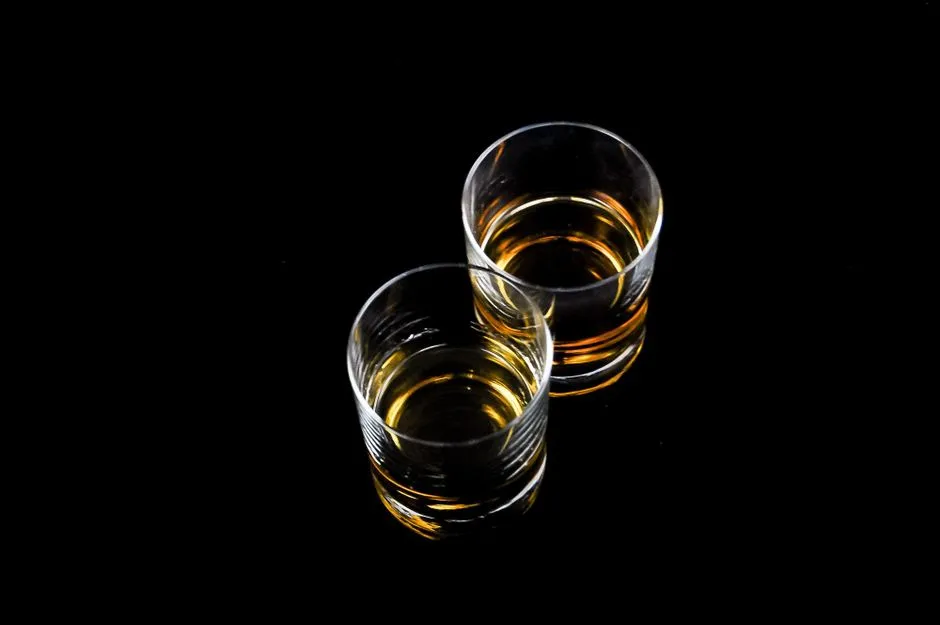
The rocks glass is the everyday workhorse of whiskey glassware — short, wide, heavy-bottomed, and built to hold ice without tipping. It's the glass most people picture when they think "whiskey glass," and for on-the-rocks pours or simple stirred cocktails, it's genuinely the right tool.
- Room for ice. The wide mouth and low profile take a large cube or sphere without crowding the whiskey.
- Stability. A flat, heavy base makes it hard to knock over on a bar cart or coffee table.
- Durability. No delicate stem and no narrow rim means it survives daily use and dishwashers better than any nosing glass.
- The tradeoff. That open mouth lets aroma escape as fast as it forms, so it's a weak choice for careful nosing — which is exactly the comparison the linked Glencairn guide above digs into.
Double Old Fashioned (DOF) Glass
A step up in size from the standard rocks glass, the double old fashioned — often just called a DOF — is built for bigger pours, bigger ice, or whiskey cocktails with more volume, like a proper Old Fashioned with citrus and garnish. The extra height and volume comfortably fit a 2-inch ice cube plus a generous pour without the drink feeling cramped, and there's enough headroom to stir a cocktail without slopping it over the rim.
Size is also the drawback. A standard 1.5 oz neat pour barely covers the bottom of a glass that holds ten times that much to the brim, so the drink reads as an afterthought in its own vessel and there's far too much open surface for aroma to do anything useful. The DOF is a cocktail and rocks glass first, a sipping glass a distant second.
Snifter
Borrowed from brandy and cognac service, the snifter has a wide, round bowl that narrows sharply toward the rim, set on a short stem or foot. That stem is deliberately short: the design intent is for the bowl to sit cradled in your palm so that body heat gently warms the spirit — the opposite of a tall wine stem, which exists to keep your hand away from the glass.
Why it works: the large bowl surface makes it easy to swirl a pour and release aroma, and the pronounced taper does a good job trapping that aroma before it escapes. Gentle warming increases evaporation, which is why the shape suits brandy and why some drinkers like it for slow, after-dinner sipping.
Worth knowing: that same warming pushes a whiskey's alcohol vapor forward faster than a Glencairn's cooler, more controlled shape, and combined with the sharply tapered rim it can make a high-proof pour hard to nose. Snifters are also among the larger and more fragile glasses here — a wide, thin bowl on a short stem is not the shape you want in daily rotation.
Highball Glass
Tall and straight-sided, the highball glass isn't built around whiskey specifically — it's built around whiskey-and-something. Think whiskey and soda, whiskey and ginger, or any long mixed drink where the spirit is a minority of the volume. The tall cylinder gives mixers room to layer over ice without diluting too fast, and the narrow footprint makes a long drink easy to hold. If your go-to serve involves a mixer, this is the more honest choice than forcing it into a rocks glass.
It does nothing at all for nosing or appreciating whiskey on its own, though. It's a mixed-drink glass, not a tasting glass, and it shouldn't be your only whiskey glass if you also drink neat pours.
Shot Glass
The shot glass is the simplest entry here: small, straight-sided or slightly tapered, meant for a fast single pour rather than sipping or nosing. It earns its place as a utility item — quick pours, an occasional celebratory round, and rough measuring in a home bar setup, since many double as informal jiggers.
What it isn't is a glass for appreciation. The small volume and often thick walls leave almost no headspace for aroma, and sipping slowly from one is an awkward experience next to any of the shapes above. Treat it as bar equipment rather than whiskey glassware.
Quaich (Traditional Scottish Drinking Cup)
Less common today but worth knowing, the quaich is a shallow, two-handled drinking cup with roots in Scottish Highland tradition. The name comes from the Gaelic for cup, and the two flat handles — often called lugs — let it be passed easily from one person to another, which is the whole point: the quaich was a vessel for shared toasts, welcomes and farewells rather than for solitary sipping. Early ones were turned from wood; later examples were made in pewter and silver, and it still turns up at Scottish weddings and Burns Night suppers.
As a drinking vessel it does essentially nothing for aroma — it's wide, shallow and completely open, which is the least favorable geometry on this list for holding volatiles anywhere near your nose. That's not a flaw so much as a different purpose. For readers with a Scotch focus it's a genuine piece of heritage and a distinctive gift or display piece, and a ceremonial dram out of one is a fine tradition; it just isn't a tasting glass. One practical note on material: modern pewter sold for food and drink use is lead-free, but antique or unmarked pewter pieces may not be, so an inherited quaich is safer treated as a display object than as something you drink from regularly.
Crystal or Glass: Does the Material Change Anything?
Shape matters more than material for how a whiskey smells and tastes, but material affects weight, clarity, and care. Lead crystal has traditionally been prized for its brilliance and heft, though most crystal glassware sold today is lead-free, and that's generally the safer default to look for. Leaded glass is fine for drinking from — the brief contact during a pour and a sip isn't a meaningful exposure concern — but it's not something you want holding whiskey for long-term storage, since lead can leach into a spirit over extended contact. That's a decanter question more than a glass question, and we cover it separately in our guide on whether lead crystal is safe for whiskey.
For a full look at whether crystal is worth the upgrade over ordinary glass, see our crystal vs glass comparison.
How to Match the Glass to How You Drink
- Neat, for nosing and evaluating: Glencairn or copita/tulip.
- On the rocks, everyday drinking: rocks glass or DOF, depending on ice size.
- Whiskey cocktails with a mixer: highball.
- Stirred cocktails like an Old Fashioned: rocks glass or DOF.
- Slow, after-dinner sipping: snifter or Glencairn.
- Quick pours or measuring: shot glass.
- Toasts and ceremony: quaich.
If you're newer to whiskey and unsure how you actually prefer to drink it — neat, with a splash of water, or over ice — it's worth working through that before you invest in glassware. Our guide on how to drink whiskey covers the tradeoffs of each serving style in more detail.
Does the Whiskey Style Change the Glass?
Not really. Bourbon (a US whiskey made from a mash of at least 51% corn and aged in new charred oak barrels) and Scotch (built on malted barley traditions and produced in Scotland) both work in the same shapes — glass choice is about how you're drinking, not which whiskey category is in the glass. A Glencairn nosing a bourbon does the same job it does nosing a Scotch. Proof is the variable that actually matters: the higher the strength, the more a tapered glass amplifies alcohol vapor along with everything else, and the more a few drops of water help.
Care and Durability
Everyday glasses like rocks glasses, DOFs, and highballs are the easiest to live with — thick walls, wide openings that are simple to wash by hand or load in a dishwasher, and enough weight to feel sturdy without being fragile. Nosing glasses and snifters trade some of that durability for shape: thinner walls and narrower openings mean more careful handwashing and a higher chance of chipping a rim in a crowded sink.
A few habits go a long way with the delicate shapes. Wash them on their own rather than buried under plates, use warm rather than hot water on thin-walled glass to avoid thermal shock, and rinse thoroughly — detergent residue is one of the most common reasons a nosing glass smells faintly of something that isn't whiskey. Dry with a lint-free cloth instead of leaving them to air-dry rim-down on a towel, which traps a stale note inside a narrow bowl. Store them upright on an open shelf rather than sealed in a cabinet with the mouths covered, and give a stored glass a quick rinse before pouring if it's been sitting for months. Stemmed copitas and snifters are best held by the bowl when washing, not the stem, since twisting force at the joint is where they usually break.
If you're building a set for regular use rather than occasional tastings, weighting your collection toward the sturdier shapes and keeping one or two nosing glasses back for special pours is a reasonable way to balance function against fragility. Decent glassware in these categories typically runs anywhere from around $10 a glass for basic tumblers to $40 or more for crystal nosing glasses, though prices vary by retailer and by how the set is packaged.
Bottom Line
Start with a Glencairn if you drink whiskey neat or want to actually nose and taste what you're pouring — it's the single most versatile shape here, with the caveat that high-proof pours benefit from a little water. Add a rocks glass for everyday on-the-rocks pours and simple cocktails, and treat everything else — snifters, highballs, tulip glasses, shot glasses, quaichs — as specialty additions once you know how you actually drink. For specific product recommendations across these categories, our best whiskey glasses roundup breaks down picks by style and budget.