How to Store Whiskey: Open Bottles, Light, Heat & Longevity
- The short version
- Does whiskey actually go bad?
- Where to store whiskey: light, heat, and position
- How long does opened whiskey last?
- Should you decant for storage?
- Does humidity matter for whiskey storage?
- Storing whiskey as a collector or long-term hold
- Do you need to refrigerate whiskey?
- Signs your whiskey has degraded
- Quick reference: unopened vs. opened storage
- A simple whiskey storage checklist
The short version
Whiskey is a distilled spirit, not a wine — once it's bottled, it stops aging and barely changes if you store it right. The rules are simple: keep bottles upright, out of direct light, away from heat sources, and reasonably sealed. An unopened bottle stored this way will taste essentially the same in ten years as it does today. An opened bottle has more variables at play, mostly driven by how much air is sitting on top of the liquid.
None of this requires special equipment. A cabinet, a shelf out of the sun, and a snug cap will outperform almost any gadget marketed for the purpose.
Does whiskey actually go bad?
Not in the way food does. Whiskey's high alcohol content (typically 40% ABV or more) makes it inhospitable to the bacteria and mold that spoil perishable goods, so an unopened bottle kept in reasonable conditions doesn't have a meaningful expiration date. What can happen over long periods, especially once a bottle is opened, is slow flavor drift: oxidation can mute or flatten aromatics, and evaporation through an imperfect seal can concentrate or dull certain notes. It's a gradual, cosmetic decline in character, not spoilage.
The two things that actually accelerate this drift are light and oxygen exposure, both of which are fully within your control.
Where to store whiskey: light, heat, and position
Keep it out of direct light
Ultraviolet light breaks down some of the organic compounds responsible for flavor and color, which is the same reason many bottles ship in tinted glass. Direct sunlight is the worst offender, but even steady exposure to bright indoor lighting adds up over months and years. A closed cabinet, a pantry, or a shelf away from windows is a better long-term home than an open bar cart under a window, however good the cart looks.
Keep it cool and steady
Whiskey doesn't need refrigeration, but it does prefer stability. Aim for a spot that stays in a normal indoor range — roughly 55–75°F (13–24°C) — without wide daily swings. Avoid storing bottles above the stove, next to a radiator, in a garage that bakes in summer, or in a car. Repeated heating and cooling causes the liquid to expand and contract, which can stress the seal and push more air past the cap over time, gradually speeding up oxidation.
Store bottles upright, not on their side
This is the opposite of wine advice, and it trips people up. Wine bottles lie on their side to keep a natural cork moist and prevent it from drying out and letting in air. Whiskey's high alcohol content does the reverse: prolonged contact between spirit and cork can degrade the cork itself and, over years, taint the flavor. Standing bottles upright keeps the spirit off the closure and is the standard recommendation across the category, whether the bottle uses a natural cork, a synthetic stopper, or a screw cap.
How long does opened whiskey last?
There's no hard deadline, but the honest answer is that opened whiskey is at its best within the first one to two years, and a bottle that's mostly full will hold its character notably longer than one that's mostly empty. The real driver isn't a clock — it's headspace.
The headspace factor
Every time you pour a glass, you leave behind more air in the bottle. That air is oxygen, and oxygen is what drives the slow flavor drift described above. A freshly opened, nearly full bottle has very little headspace and changes almost imperceptibly for a long time. A bottle that's down to its last quarter has a lot of air sitting on top of the remaining liquid, and that whiskey will show more noticeable softening of aroma and flavor within months rather than years.
If you know you won't finish a bottle soon, two practical moves help: reseal the cap firmly and store the bottle upright immediately after each pour, and consider decanting a low bottle into a smaller, fuller container to reduce the airspace-to-liquid ratio. Neither trick stops oxidation entirely, but both slow it down meaningfully.
Should you decant for storage?
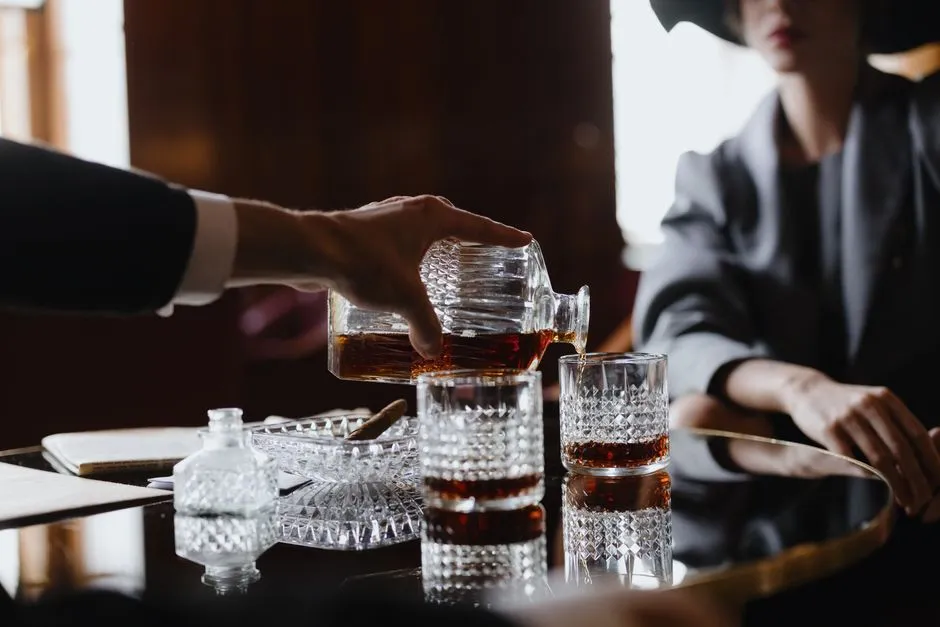
A decanter is primarily a display and serving choice, not a preservation upgrade, and the distinction matters. A well-sealed decanter with a snug stopper can hold whiskey perfectly well for weeks of regular drinking — the same headspace logic applies as with an original bottle. But most decanter stoppers, however elegant, don't seal as tightly as a factory cap, so a decanter isn't the place to stash a bottle you plan to leave untouched for a year or more. For that, the original, well-sealed bottle wins. We cover this distinction in more detail in does decanting whiskey do anything, including what decanting does and doesn't change about the liquid itself.
The lead crystal caveat
If your decanter is made of leaded crystal, there's a separate and more important reason to treat it as a serving vessel rather than long-term storage: prolonged contact between an acidic or alcoholic liquid and leaded glass can allow trace amounts of lead to leach into the liquid over weeks and months. It's not a concern for the time a drink spends in a glass, or even a decanter used for a special occasion, but it's a real reason not to store whiskey in a lead crystal decanter indefinitely. If you're decanting for the long haul, a lead-free crystal or plain glass piece is the safer call — our guide to picking a whiskey decanter covers what to look for, including lead-free composition.
Does humidity matter for whiskey storage?
Not the way it does for wine. Wine collectors track humidity closely because a dried-out natural cork lets air seep into the bottle, and correcting that requires a controlled cellar environment. Whiskey's much higher alcohol content and, in many cases, synthetic stoppers or screw caps make it far less sensitive to ambient humidity. A normal indoor environment — neither bone-dry nor damp — is fine. You don't need a wine fridge, a humidor, or a climate-controlled cabinet to keep whiskey in good shape; a dry basement or an air-conditioned room both work well as long as temperature stays reasonably stable.
The one place humidity is worth a thought is label preservation. Very damp storage can cause labels to peel, curl, or grow mildew over years, which matters if you're holding onto a bottle for its collectible or display value rather than just for drinking.
Storing whiskey as a collector or long-term hold
If you're holding a bottle for years rather than months — for a collection, a gift, or simply because you're not in a hurry to open it — the same core rules apply, just with more discipline. Keep the bottle upright at all times, away from any light source, in a cabinet or closet rather than open shelving, and in a room that doesn't see big seasonal temperature swings (an interior closet beats an attached garage or an uninsulated attic). Original packaging, if you kept it, adds an extra layer of light and impact protection and is worth holding onto for anything you consider a long-term keeper.
What long-term storage won't do is improve the whiskey. Unlike wine, whiskey doesn't continue to develop once it leaves the barrel and goes into glass — all the character it's going to have is already there at bottling. Careful storage simply protects that character; it doesn't add to it.
Do you need to refrigerate whiskey?
No. Refrigeration isn't necessary and isn't recommended for storage — cold temperatures don't preserve whiskey any better than a stable room-temperature spot, and repeated trips in and out of the fridge introduce the same expansion-and-contraction stress that heat does. If you like your whiskey colder in the glass, chill the pour, not the bottle. That's really a serving preference rather than a storage question, and it's one we walk through in how to drink whiskey, including the case for and against ice.
Signs your whiskey has degraded
Because whiskey doesn't spoil in the food-safety sense, look for character changes rather than danger signs:
- Flattened aroma — the nose seems muted or one-dimensional compared to when the bottle was fresh.
- Noticeable evaporation — the liquid level has dropped visibly beyond what pouring accounts for, suggesting the seal isn't tight.
- Harsher or duller palate — flavors that used to feel balanced now taste flatter or slightly more astringent.
- Off smells — any smell resembling nail polish, vinegar, or wet cardboard means something has gone wrong with the seal or storage conditions, not just normal slow drift.
None of these make whiskey unsafe to drink; they just mean it won't taste like it did on day one.
Quick reference: unopened vs. opened storage
| Unopened bottle | Opened bottle | |
|---|---|---|
| Typical timeline | Effectively indefinite if stored well | Best within 1–2 years, sooner once past the halfway mark |
| Main risk factor | Light and heat exposure over years | Oxidation from growing headspace |
| Position | Upright | Upright |
| Seal | Factory seal, minimal concern | Reseal firmly after every pour |
| Location | Cool, dark cabinet or shelf | Same, plus keep away from stove or sunny windows |
| Refrigeration needed | No | No |
A simple whiskey storage checklist
- Store bottles upright, always.
- Keep them out of direct sunlight and away from bright, constant indoor light.
- Choose a spot with stable temperature — a closed cabinet beats an open bar cart near a window.
- Reseal caps firmly after every pour to limit air exchange.
- Don't refrigerate or freeze.
- Use a decanter for serving and short-term display, not indefinite storage — and skip leaded crystal for anything you plan to leave filled for long stretches.
- Finish opened bottles within a year or two for the best experience, and drink down low bottles sooner rather than later.
Get the basics right and whiskey is remarkably forgiving. The goal isn't a wine-cellar setup — it's just keeping light, heat, and excess air away from the bottle.